What Is Christian Counseling? An Essential Faith-Based Guide
Discover what Christian counseling is, how it works, and how faith, Scripture, and professional support can help with life’s challenges.
By Richard Germaine11 min read
Christian counseling can combine counseling support with Christian faith and values when appropriate. Depending on the counselor's approach and the concerns being addressed, sessions may include conversation, practical guidance, Scripture, prayer, or temperament insight.
You do not need to have the perfect words to begin. If you are considering faith-based support, keep reading to learn how Christian counseling works with Joyful Life Christian Counseling, and how Richard Germaine's Temperament Therapy approach incorporates temperament insight into the counseling process.
What Is Christian Counseling and How Does It Work?
Christian counseling combines professional counseling with Christian faith and values. It can help us work through emotional, personal, relationship, behavioral, and spiritual concerns.
The National Institute of Mental Health (NIMH) describes psychotherapy as a form of treatment that can help people identify and change difficult emotional, mental, and behavioral patterns.
Psychotherapy (also called talk therapy) refers to a variety of treatments that aim to help a person identify and change troubling emotions, thoughts, and behaviors.
This provides a useful foundation for understanding counseling as a process that can address more than simply giving advice. For a clearer sense of what Christian counseling means, it helps to see it as a process that brings counseling support and a Christian worldview together.
A Christian counselor may help us:
- Understand and process difficult emotions
- Recognize unhealthy patterns
- Set practical goals
- Improve communication
- Build healthier coping skills
Faith can also be part of the counseling process. Depending on our needs and the counselor's approach, sessions may include Scripture, prayer, biblical principles, forgiveness, spiritual growth, or reflection on our relationship with God.
However, Christian counseling does not mean every session is focused on prayer or Bible study. It is also more than simply receiving religious advice. Christian counselors may have different types of training, professional roles, and scopes of practice. Readers can ask about a counselor's qualifications and the type of support they provide before beginning.
Richard Germaine is described by Joyful Life as a Licensed Christian Counselor, Life Coach, Certified Temperament Therapist, Professional Clinical and Executive Member of the National Christian Counselors Association, and Commissioned Minister of Counseling. The About page also lists his B.A. in Psychology from Hofstra University.
What Makes Joyful Life's Approach Different: Temperament Therapy?
Joyful Life describes its approach as combining conversation with biblical truth, prayer, practical guidance, and temperament insight.
Instead of starting with a generic list of coping techniques, Richard Germaine uses the Temperament Assessment Profile Questionnaire to identify something deeper: a client's inborn temperament. This is the God-given wiring behind how a person handles:
- Stress
- Relationships
- Decisions
The Temperament Assessment Profile Questionnaire is intended to provide additional insight into inborn temperament patterns that may influence stress, relationships, and recurring reactions. Joyful Life describes this temperament insight as part of an approach that also includes conversation, biblical truth, prayer, and practical guidance.
How Does Christian Counseling Work?
Christian counseling usually begins with a conversation about what brings us in. We may talk about current struggles, emotions, relationships, personal experiences, behaviors, faith, and goals.
You do not need the perfect words or a clear plan before your first session. Understanding what to expect from Christian counseling can make that first step feel a little easier. From there, Richard can better understand our needs and choose an approach that fits. Sessions may include:
- Goal setting: Identifying areas where support or meaningful change may help.
- Counseling work: Exploring concerns through conversation, coping strategies, communication work, or other appropriate methods.
- Faith integration: Scripture, prayer, Christian reflection, or spiritual questions may be included when they fit our needs.
- Progress review: Looking at what is improving and what may still need attention.
Every Christian counseling experience can look different. The counselor’s training, approach, concerns being addressed, and role of faith all shape the process. The goal is to create a supportive space where we can speak openly, feel heard, and work toward meaningful change at a comfortable pace.
How Does This Approach Differ From Secular Counseling?
Both Christian and secular counseling can offer a safe place to talk through emotional, personal, and relationship concerns. The main difference is the worldview that shapes the counseling process. A Christian approach intentionally includes faith and may explore beliefs about God, Christ, grace, forgiveness, and spiritual growth.
For readers wondering how Christian counseling is different, the distinction is mainly found in how faith and Christian beliefs are included in the counseling framework.
Depending on our needs and the counselor’s approach, sessions may include:
- Scripture and prayer: These may be included when they fit our needs and comfort level.
- Counseling methods: Established counseling methods may be used alongside faith-based practices.
- Personal and spiritual goals: Sessions may support emotional health, relationships, personal growth, and faith.
It is also worth noting that Christian counseling is not always the same as biblical counseling. Biblical counseling generally places Scripture at the center of how problems and personal change are understood.
There is no one approach that is right for everyone. What matters is finding a counselor whose training, approach, and faith perspective feel comfortable and appropriate for us.
Who Joyful Life Serves?
Joyful Life Christian Counseling is structured around two dedicated paths so clients work with someone suited to their situation:
- Counseling for men: Richard Germaine works directly with men, combining Temperament Therapy with Christian counseling to address stress, anger, marriage and infidelity concerns, anxiety, and trauma.
- Counseling for women: Joyful Life currently refers women seeking faith-informed counseling to Patrice Gaillard, PhD, at Respite for Change.
If you're not sure which path fits your situation, that's a good first question to bring to a free introductory session.
What Can You Gain From the Counseling Process?
The goals of counseling depend on what we are facing and what we hope to change. For some, it may mean learning to manage difficult emotions.
For others, it may involve rebuilding trust, handling a major life change, or growing in faith. This is one reason the question of why people choose Christian counseling can have many different answers.
Some areas we may work on include:
- Emotional awareness: Understanding difficult feelings and patterns that keep coming back.
- Healthy coping: Finding practical ways to handle stress, grief, anxiety, anger, or life changes.
- Relationship growth: Working through communication, trust, boundaries, and conflict.
- Personal growth: Reflecting on choices, values, and behaviors that shape daily life.
- Spiritual growth: Exploring prayer, Scripture, forgiveness, purpose, and our relationship with God.
- Healing: Processing experiences that continue to cause emotional pain.
For some people, counseling may also involve addressing root causes, such as recurring emotional patterns, unresolved experiences, relationship difficulties, or beliefs that affect the way we respond to life.
The goal is not to promise a specific outcome but to create a confidential and supportive space for honest reflection and meaningful change. A free session gives us a chance to ask questions, share our concerns, and see if the approach feels right without complicated paperwork.
How Are Scripture, Prayer, and Faith Used in Counseling?
Scripture, prayer, and Christian faith can have a meaningful place in Christian counseling when they fit our needs, comfort level, and the counselor’s approach. They are not meant to make every session feel like a Bible study or replace appropriate professional support.
For example, Scripture may help us reflect on hope, forgiveness, identity, relationships, suffering, or spiritual growth. Prayer may give us space to bring our concerns to God, while spiritual reflection can help us explore purpose, faith, and our relationship with Him.
Faith integration may include:
| Faith Element | How It May Be Used in Counseling | | ----- | ----- | | Scripture | Biblical passages may support reflection on hope, forgiveness, identity, relationships, suffering, and personal growth. | | Prayer | Prayer may provide a way to express concerns, seek God’s guidance, and bring personal struggles before Him. | | Christian Worldview | Christian beliefs may help shape conversations about identity, relationships, responsibility, values, hope, and personal choices. | | Spiritual Reflection | Honest conversations may explore purpose, forgiveness, faith, spiritual growth, and our relationship with God. | | Professional Counseling | Appropriate counseling methods and practical support may be used alongside faith-based practices when they fit the counselor’s training and our needs. |
For more serious concerns, appropriate mental health care remains important. Christian counseling can combine faith-informed guidance with counseling support within the counselor’s stated training and scope.
Serious symptoms or safety concerns may require additional care from an appropriately licensed mental-health provider. A free session can provide a comfortable way to ask questions before getting started.
What Issues Can Counseling Help With?
Joyful Life's counseling addresses five core areas:
- Anxiety
- Anger
- Marriage and infidelity
- Trauma
- Temperament Therapy (as its own focused offering, using the Temperament Assessment Profile Questionnaire)
Not every counselor works with every concern. When an issue requires specialized or higher-level care, or falls outside these areas, a referral to another professional may be recommended.
What Counseling Approaches Can We Consider?
Christian counseling does not follow one standardized method. Different counselors may combine psychological knowledge, Christian theology, biblical teaching, pastoral guidance, and spiritual practices in different ways.
Because of this, seeing the word “Christian” does not always tell us exactly what to expect in a session. The counselor’s training, professional role, counseling model, and approach to faith integration can give us a clearer picture of how sessions are conducted. Learning about Christian counseling methods and techniques can also help us understand what type of approach may be used.
These are general categories that readers may encounter in Christian counseling. Joyful Life specifically presents its approach through biblical truth, prayer, practical counseling, and temperament insight. Readers should ask the practice which methods are currently used in a particular counseling process.
General approaches readers may encounter include:
- Biblical counseling: Scripture has a central role in understanding personal struggles, values, and change.
- Integrationist counseling: Christian beliefs and psychological knowledge are intentionally brought together during the counseling process.
- Christian psychotherapy: Christian psychotherapy generally refers to psychotherapy provided within a Christian framework. Its availability and scope depend on the provider's qualifications and professional role .
- Pastoral counseling: Guidance takes place within a pastoral or ministry setting and may focus on personal, relational, and spiritual concerns.
- Spiritual direction: The focus is primarily on spiritual formation, discernment, and our relationship with God rather than clinical mental health treatment.
The term Christ-centered counseling may also describe an approach that intentionally places Christ and Christian faith at the center of the counseling framework.
These approaches are related but not necessarily interchangeable. Understanding the counselor’s qualifications, role, methods, and use of faith can help us choose an approach that fits our needs and expectations.
How Can We Choose a Qualified Counselor?
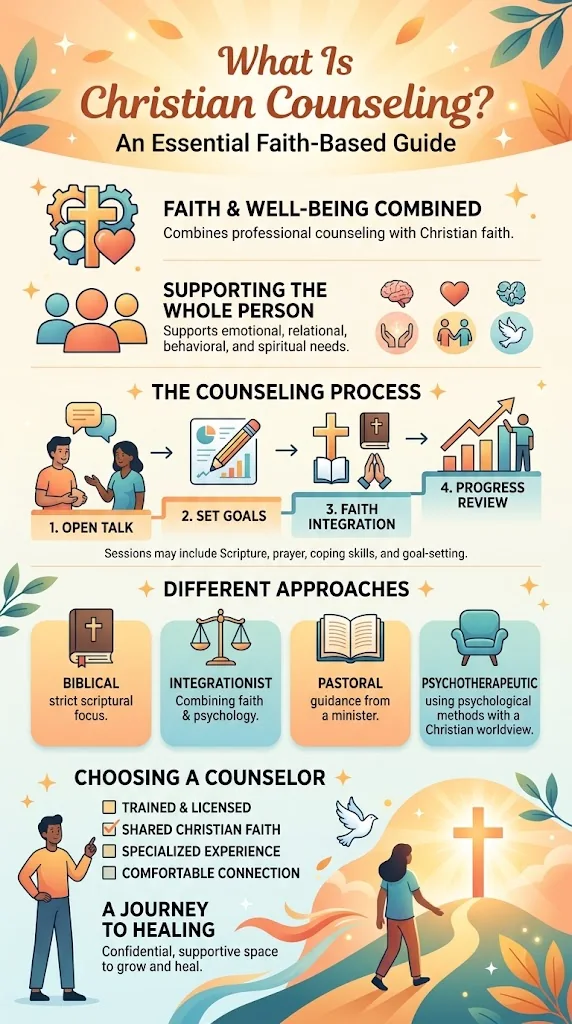
Choosing a Christian counselor involves looking at more than shared faith. We also want to understand the counselor's professional qualifications, experience, and approach to faith.
Richard Germaine is described by Joyful Life as:
- Licensed Christian Counselor
- Life Coach
- Certified Temperament Therapist
- Professional Clinical and Executive Member, National Christian Counselors Association (NCCA)
- Commissioned Minister of Counseling
- B.A. in Psychology, Hofstra University
Before starting, we can ask about:
- Professional license: Whether the counselor holds the appropriate license for the services provided.
- Education and training: Their clinical, academic, theological, or specialized training.
- Faith approach: How Scripture, prayer, and Christian beliefs may be incorporated.
- Temperament approach: Whether the Temperament Assessment Profile Questionnaire or another temperament assessment is part of the process.
- Confidentiality: How privacy, boundaries, communication, and session information are handled.
A qualified counselor should also clearly explain the type of support they provide. If you are considering a Christian counseling appointment in Vero Beach, reviewing the counselor’s qualifications, approach, and available services can help you make a more informed decision.
A free initial session can also give you an opportunity to ask questions and decide whether the setting feels comfortable for you.
FAQ
How Is Christian Counseling Different From Biblical Counseling?
Christian counseling is a broad term for counseling that incorporates Christian faith, while biblical counseling generally places Scripture at the center of understanding problems and pursuing change. The exact distinction can vary between counselors and organizations.
What Happens During a Christian Counseling Session?
A session may involve discussion of our concerns, emotions, relationships, experiences, and goals. Depending on the counseling approach, we may also use practical exercises, therapeutic methods, Scripture, prayer, or Christian reflection.
Is Christian Counseling Only for People With Mental Health Conditions?
No. Christian counseling may address stress, grief, relationship difficulties, anger, major life changes, personal struggles, and spiritual concerns. It can also support personal growth when appropriate.
Does Christian Counseling Include Prayer and Scripture?
It may, but not every counselor uses Scripture or prayer in the same way. We can ask about the counselor's approach before beginning so we understand how faith will be incorporated.
How Do We Know If Christian Counseling Is Right for Us?
Christian counseling may fit when our faith is an important part of how we understand our values, relationships, struggles, and hope. We should also consider the counselor's qualifications, experience, approach, and ability to address the concerns involved.
What Can Christian Counseling Offer?
Christian counseling combines counseling support with a Christian worldview to address emotional, personal, relationship, behavioral, and spiritual concerns. Scripture and prayer may be included based on our needs, while confidentiality remains important throughout the process.
At Joyful Life Christian Counseling, we offer a faith-based setting with biblical principles and practical counseling support. You do not need the perfect words or complicated paperwork to begin.
A free session gives you space to ask questions and explore whether our approach is right for you. Joyful Life Christian Counseling can help you take that first step.